reap for podcasters
Turn every podcast episode into content built to travel
Find the strongest moments in your video podcast, turn them into captioned podcast clips, or transform audio-only episodes into branded audiograms. Then edit, localize, and schedule the rollout in reap.
Video podcast or audio-only show, every episode gets a visual life.
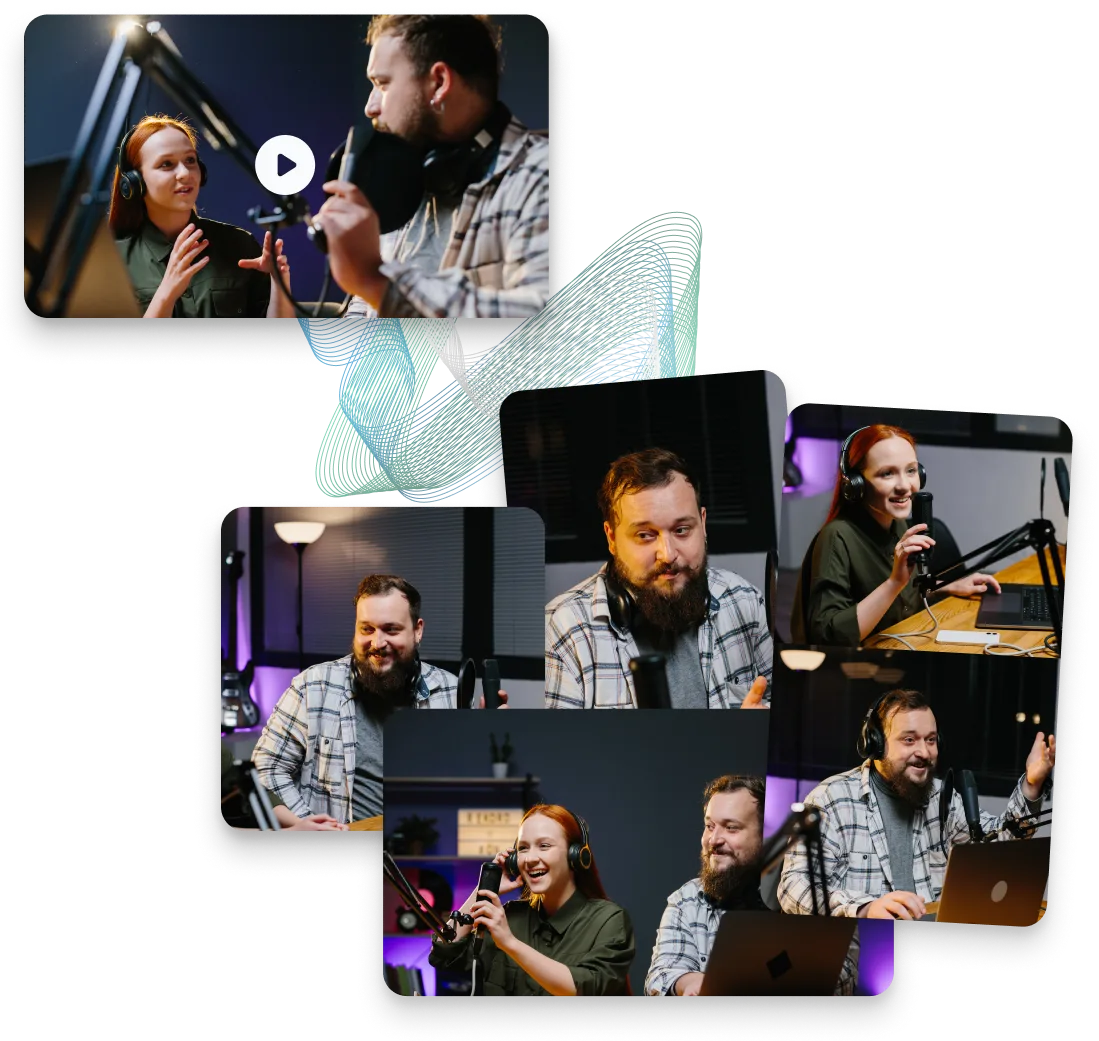
One episode. Every clip a feed needs.
- Episode clips From the full recording
- Guest moments The best of the interview
- Hot takes The line worth quoting
- Q&A cuts From listener questions
- Audiograms For audio-only episodes
- Trailer cuts The teaser for the next one
- Localized versions 100+ caption languages
Captions, translation, and dubbing are paid-plan capabilities. Every clip opens in the editor before it goes anywhere.
An episode should keep working after release day.
Recording and publishing the full conversation is only the beginning. The best stories, opinions, lessons, and guest moments stay buried unless someone finds, edits, formats, and distributes them. And that someone is usually you, every single week.
- Scrubbing through long recordings
- Marking timestamps by hand
- Cutting each clip separately
- Reframing several speakers
- Adding captions clip by clip
- Restyling every export
- Exporting several formats
- Uploading to each platform
- Doing it all again next week
The content already exists. The production bottleneck is what happens next.
Every kind of podcast
Recorded on camera or audio-only, every show can become visual content.
reap has a path for both kinds of show. Pick the one that matches how you record.
Video podcast
- Upload the full episode or paste a supported link
- Let AI suggest moments, or describe the ones you want
- Get vertical clips with speaker tracking
- Add captions and your show's branding
- Schedule the rollout or export

Powered by AI clipping with automatic portrait reframing.
Audio-only show
- Upload the episode as MP3, M4A, or WAV
- Pick an audiogram template
- Add the waveform, captions, logo, text, and background
- Choose portrait, square, or landscape
- Refine and export
Audiograms give an audio episode a visual life, with animated captions on top of the waveform.
The good parts are already in there
Find the moments listeners will want to share.
AI clipping surfaces the stories, opinions, lessons, and exchanges that can stand on their own outside the full episode, then cuts them into captioned clips sized for every platform. No scrubbing a 90-minute recording for them.
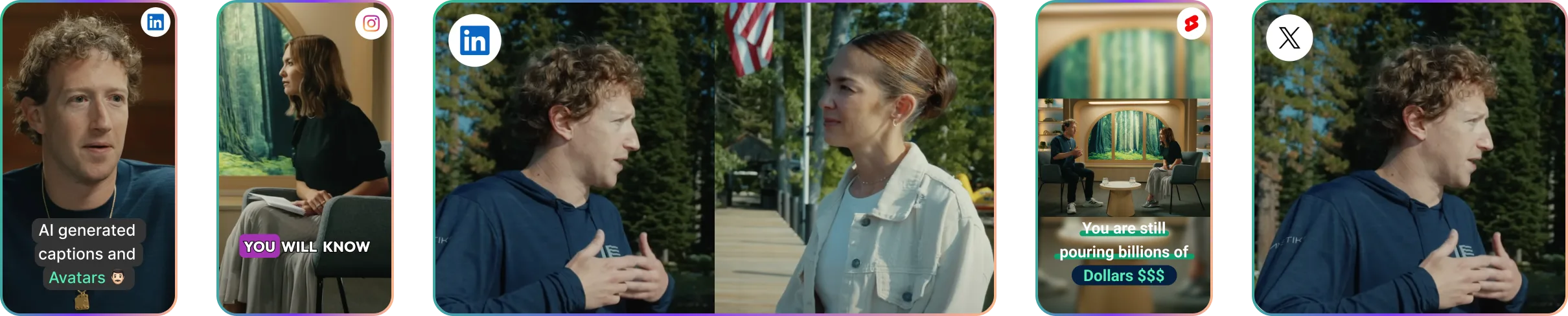
Vertical video should still feel like a conversation.
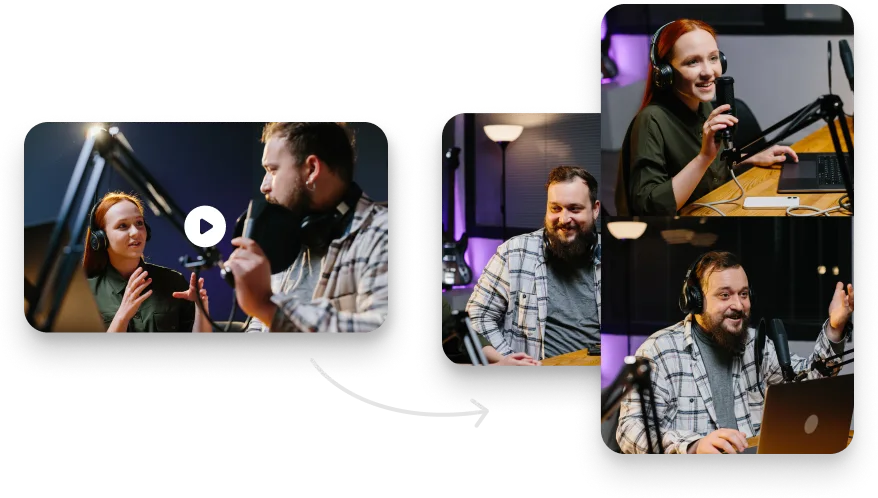
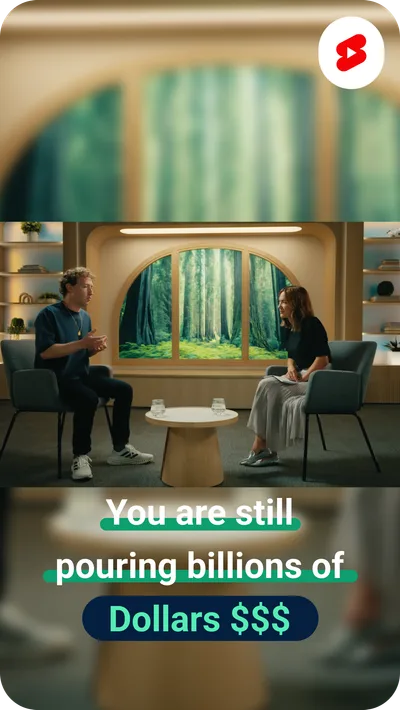
Podcast footage usually spreads two or more people across a wide frame. reap’s speaker and face tracking keep the active conversation visible when that frame becomes a 9:16 clip.
- The host speaks, the host is in frame
- The guest answers, the framing follows
- Multi-speaker layouts for panels and co-hosts
- Composition that leaves room for captions
Square and landscape layouts are there too, for feeds that aren’t vertical. How auto-reframing works.
Make the idea clear before the viewer turns the sound on.
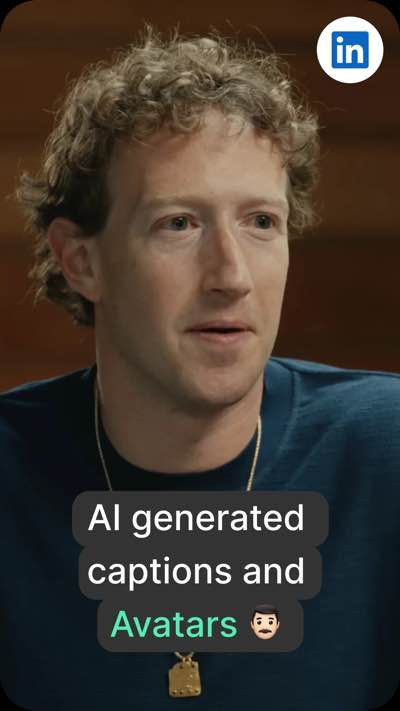
Most feeds start muted. Animated captions carry the moment: timed word by word, with the important ones highlighted, in a style that feels like your show rather than a generic preset. These live previews come straight from the caption tool’s 50+ preset library.
- Captions timed to the conversation
- Keyword highlighting for the line that matters
- Your fonts, colors, and safe positioning
- 100+ languages, native or Roman script
Build recognition across every episode.
Save the show’s fonts, colors, caption style, logo, intro, outro, background, and orientation in a reusable brand template. Apply it when clips are created, and episode 41 looks like episode 40 without anyone restyling a thing.
One template per format or audience. The same clip pipeline, different uniforms.
- Caption style
- Impact
- Font
- Montserrat-Bold
- Logo
- Top left
- Intro / Outro
- Opener · End card
- Orientation
- Portrait · 1080p
Saved once · applied to every new clip



A podcast can travel further than its recording language
Bring the conversation to more audiences.
Three different treatments, three different jobs. Pick per clip and per market.
Caption translation
Changes the written text. The clip keeps its original audio; the captions read in the viewer's language.
Roman script
Changes how a language is written. Hinglish, Romanized Urdu, Arabizi: captions the way audiences actually read on social.
AI dubbing
Changes the spoken audio. Selected clips re-voiced in 80+ languages and regional variants.
Translated captions and subtitles change what viewers read; AI dubbing changes what they hear.
Don’t post every clip on release day.
Select the finished clips, choose the connected destinations, and spread the episode’s best moments across the calendar, so the show stays in the feed between full-length releases.
- Day 1ReleaseEpisode trailer
- Day 2Guest insight
- Day 4Strong opinion
- Day 6Practical lesson
- Day 8Memorable story
A suggested pattern, not a rule. Week and month views, bulk scheduling, and multiple connected accounts are all in the clipping tool’s publishing flow.

Spend your judgment on the clips, not repetitive setup.
The creative calls stay yours: which moments deserve to travel, and how they should sound. What changes is everything around those calls.
| Task | Doing it by hand | With reap |
|---|---|---|
| Finding the moments | Watch the full episode again and write down timestamps. | Review suggested moments, or prompt for the ones you want. |
| Cutting the clips | Cut every segment separately on a timeline. | Adjust clip boundaries in the transcript. |
| Framing the speakers | Keyframe crops for each speaker in every vertical clip. | Speaker tracking keeps the active voice in frame automatically. |
| Captions and branding | Style captions and re-add the show branding clip by clip. | A saved caption style and brand template apply to new clips. |
| Reaching other languages | Rebuild subtitles for each language, or skip those audiences. | Translate captions or dub selected clips into supported languages. |
| Next week's episode | Rebuild the whole workflow from scratch. | The same setup runs again on the next recording. |
For repeatable production
Build a workflow that starts with every new episode.
A weekly show is a recurring job, and recurring jobs belong in a pipeline. For higher-volume shows and networks, the API, CLI, MCP server, and webhooks connect podcast repurposing to the production systems you already run, on the same plan credits as the dashboard.
- One instruction, whole pipeline
- A single ask covers finding moments, reframing, captions, and your brand template. No per-episode setup.
- Get told, instead of asking
- Register a webhook and reap posts to your endpoint when clips reach a final state. No polling loop to run.
- Same credits as the dashboard
- API, CLI, and MCP draw plan credits 1:1. No separate metering, no enterprise gate.
- Review stays part of the loop
- Anything an agent starts, a human can finish in the studio before it goes anywhere.


 Claude
 Cursor
 ChatGPT
 VS Code
 OpenClaw
Built around the way your show works.
Solo podcasts
Turn monologues, commentary, and lessons into concise clips that stand on their own.
Interview shows
Surface guest stories, insights, and unexpected answers without rewatching the recording.
Co-hosted podcasts
Keep multi-speaker conversations visually clear in vertical video.
Audio-only shows
Create branded audiograms with animated waveforms and captions from audio episodes.
Weekly shows
Keep the show in the feed between releases with a repeatable per-episode rollout.
Podcast networks
A distinct brand template and a repeatable workflow for each show in the catalog.
Branded podcasts
Repurpose customer, founder, and industry conversations into campaign-ready content.
Podcast agencies
Run the same production workflow across client episodes instead of rebuilding it per show.
Editors & producers
Deliver clips, captions, and branded cuts for every host you produce.
Media teams
Turn recorded conversations into publishable social video without an edit backlog.
Built with reap.
Every step of the podcast workflow above is a product capability with its own page. Go deeper on the ones that matter to your show.
Frequently Asked Questions
Yes. Upload the episode or paste a supported link; sources up to 180 minutes go in whole. reap's AI suggests standalone moments, or you describe the moments you want, and the clips come back cut, captioned, and reframed for vertical, ready to review and refine.
reap is a podcast clip maker and podcast video editor for the clips, not audio podcast editing software for the full episode. It finds the moments, cuts them into podcast clips, and lets you trim them by editing the transcript, then captions, reframes, and brands each one. Mixing, mastering, and editing the episode itself stay with your audio editor: reap does not repair audio or remove background noise.
Yes. Speaker and face tracking keep the active speaker visible when a wide two-camera or panel recording becomes a 9:16 clip, so co-hosted shows and interviews stay readable as conversations instead of cropping one person out.
Yes. Prompt-first clipping takes plain language: "find the guest's strongest opinion", "pull every practical lesson about pricing", "create a trailer for the full episode". What comes back depends on what's actually in the recording: reap finds moments, it doesn't invent them.
Yes. Upload an MP3, M4A, or WAV file and turn it into an audiogram: an animated waveform with captions, your logo, text, and a background, in portrait, square, or landscape. Audiograms give audio episodes a visual life. They don't turn audio into camera footage.
Yes. Animated captions in 100+ languages, with custom fonts, colors, keyword highlighting, and positioning, plus native and Roman scripts like Hinglish and Romanized Urdu. Captions make a clip understandable before the viewer turns the sound on.
Yes. A brand template saves your show's fonts, colors, caption style, logo, intro, outro, background, and orientation once, and applies to the clips you create after that, so episode 41 looks like episode 40. It doesn't restyle videos you've already exported.
Both, and they're different things. Subtitle translation changes the written captions into another language, including Roman-script variants. AI dubbing replaces the spoken audio in 80+ languages and regional variants. You choose per clip which treatment a market gets.
Yes. Pick the finished clips, choose connected accounts, and place posts on a week or month calendar, individually or in bulk, across supported platforms like TikTok, Instagram Reels, YouTube Shorts, LinkedIn, and Facebook.
No. reap is not a recording studio, podcast host, or RSS feed. Record and distribute the full episode with the tools you already use. reap takes the finished recording and handles everything between the episode and the social feed.
Yes. Every clip opens in the editor: adjust clip boundaries in the transcript, fix words, restyle captions, change the framing, and swap branding before anything is exported or scheduled. The AI drafts; you decide what ships.
Yes. The API, CLI, MCP server, and webhooks run the same pipeline as the dashboard on the same plan credits, so networks and agencies can script episode-in, clips-out workflows and review the results in the studio.
It varies. A dense 90-minute interview holds more standalone moments than a 20-minute solo update, and your clip settings, prompts, and editorial judgment decide what's worth keeping. reap surfaces candidates; there's no fixed number per episode.
One episode in. A week of content out.
Your next episode is already more than one piece of content
Turn the conversation into clips, audiograms, captions, localized versions, and a consistent publishing rollout. The free plan includes 1 hour of processing, enough to try a real episode. Plans on the pricing page.
Repurpose an episode freeExplore reap