TikTok rewards fast, polished, native-feeling video, and the editor you use decides how quickly you can produce it. In 2026 the options have never been better: free mobile apps with no watermark, browser tools that need no install, and AI clip makers that turn one long recording into a week of ready-to-post TikToks. The catch is that "best" depends entirely on your workflow. A creator filming on a phone, a brand team working from templates, and a podcaster repurposing hour-long episodes need three different tools.
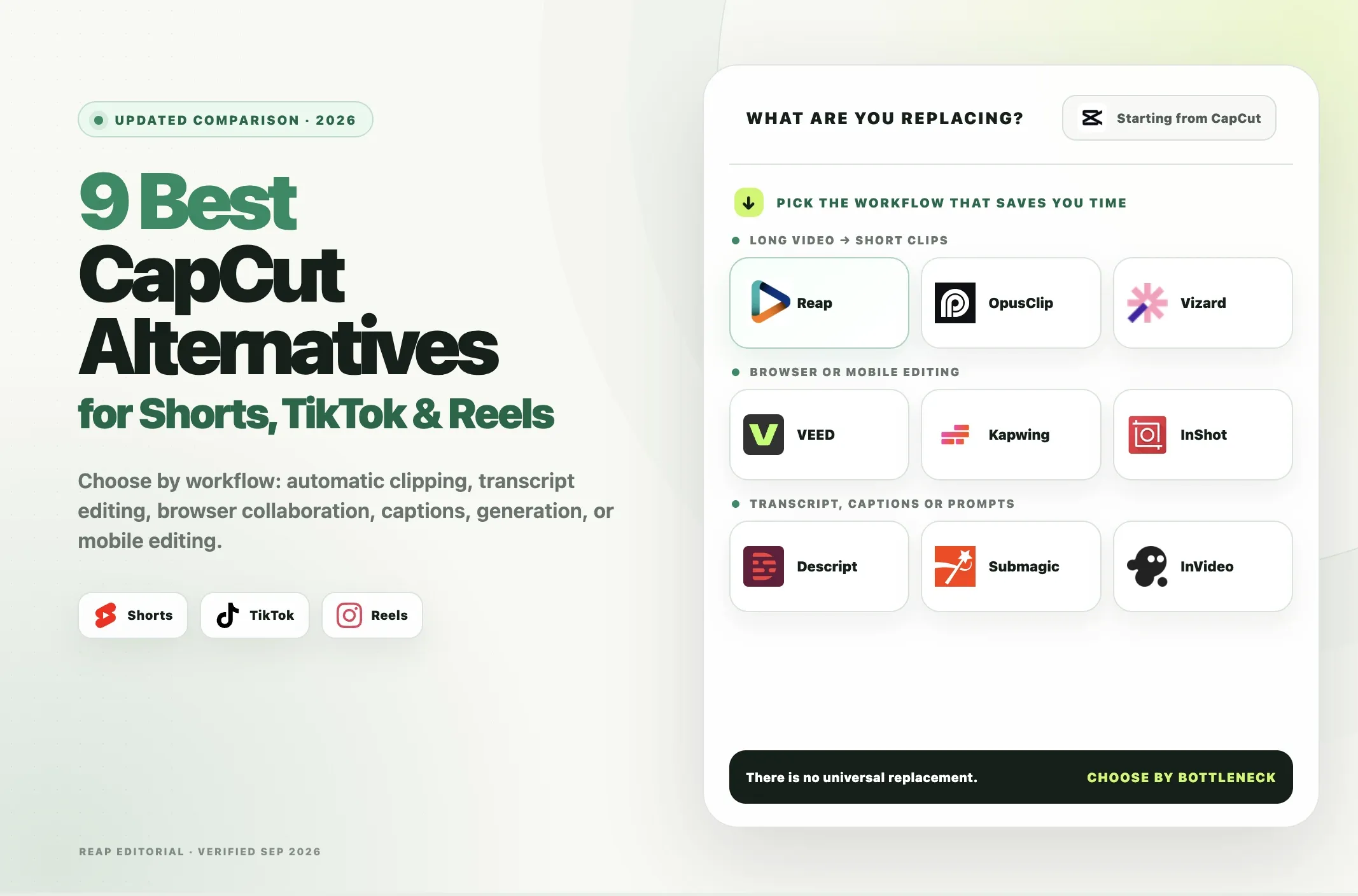
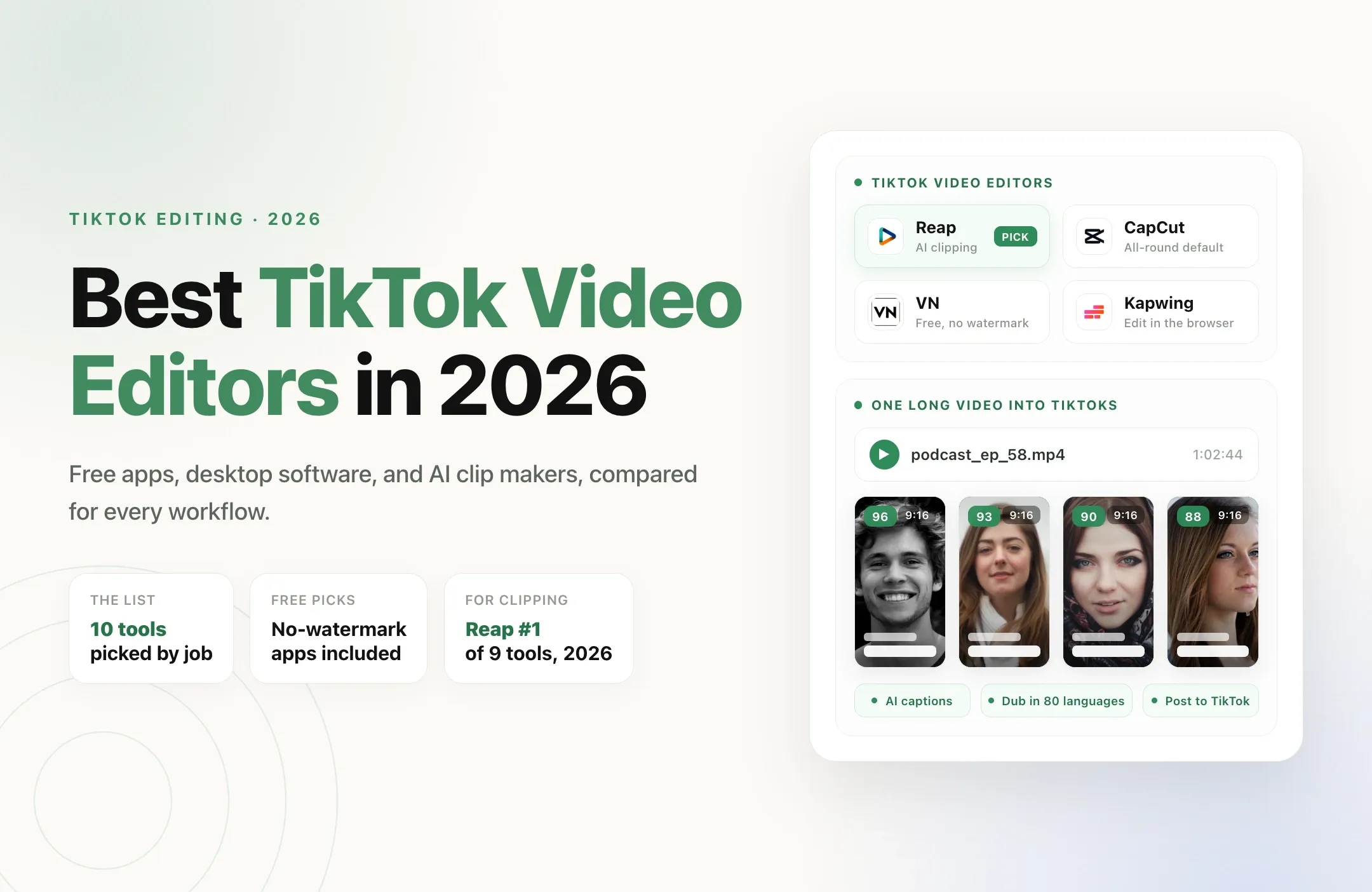
This guide covers the 10 best TikTok video editors and editing apps in 2026, organized by the job you actually need done: quick mobile edits, desktop and browser editing, and AI-powered clipping for long-form video.
Short on time? For all-round editing, CapCut. For free with no watermark, VN or PowerDirector. For the browser, Kapwing. And for turning long videos into TikToks, Reap.
What makes a good TikTok video editor in 2026
Before the list, here is what actually matters for TikTok, because it is not the same checklist as general video editing:
- Native 9:16 support. Vertical should be the default canvas, not a crop you fight for, and the editor should respect TikTok's safe zones so captions do not hide behind the UI.
- Fast, styled captions. Captions drive watch time and accessibility, and burned-in animated captions are the TikTok norm. Auto-captioning that you can restyle in one tap saves hours.
- No watermark. A third-party watermark on a TikTok reads as amateur and can suppress performance. Free tiers that export clean matter.
- Trend velocity. Templates, beat-synced cuts, and quick text animations let you jump on a trend the day it happens, not the week after.
- Repurposing power. If your source material is long-form video, the biggest time sink is not the final polish. It is finding moments, reframing to vertical, and captioning every clip. That is an AI clipping job, not a timeline job.
| Tool | Best for | Free tier | Watermark on free | Platform |
|---|---|---|---|---|
| ReapTop pick for clipping | Turning long videos into TikToks (AI clipping) | Yes | None | Web, API, CLI, MCP |
| CapCut | All-round TikTok editing, trend templates | Yes | None | iOS, Android, Desktop, Web |
| VN Video Editor | Free mobile editing with no watermark | Yes | None | iOS, Android, Desktop |
| InShot | Simple, fast social edits | Yes | Yes (removable) | iOS, Android |
| Splice | Quick beat-synced cuts on mobile | Trial | n/a | iOS, Android |
| PowerDirector | Free mobile editing with a full timeline | Yes | None (free ver.) | iOS, Android, Windows |
| LumaFusion | Professional multi-track editing on iPhone and iPad | One-time buy | n/a | iOS, iPadOS, Mac |
| Filmora | Beginner-friendly editing with AI tools | Yes | Yes (free tier) | iOS, Android, Win, Mac |
| Kapwing | Editing TikToks in the browser | Yes | On some exports | Web |
| Canva | Templates and brand teams | Yes | On some exports | Web, Mobile |
The 10 best TikTok video editors and editing apps
1. Reap, best for turning long videos into TikToks
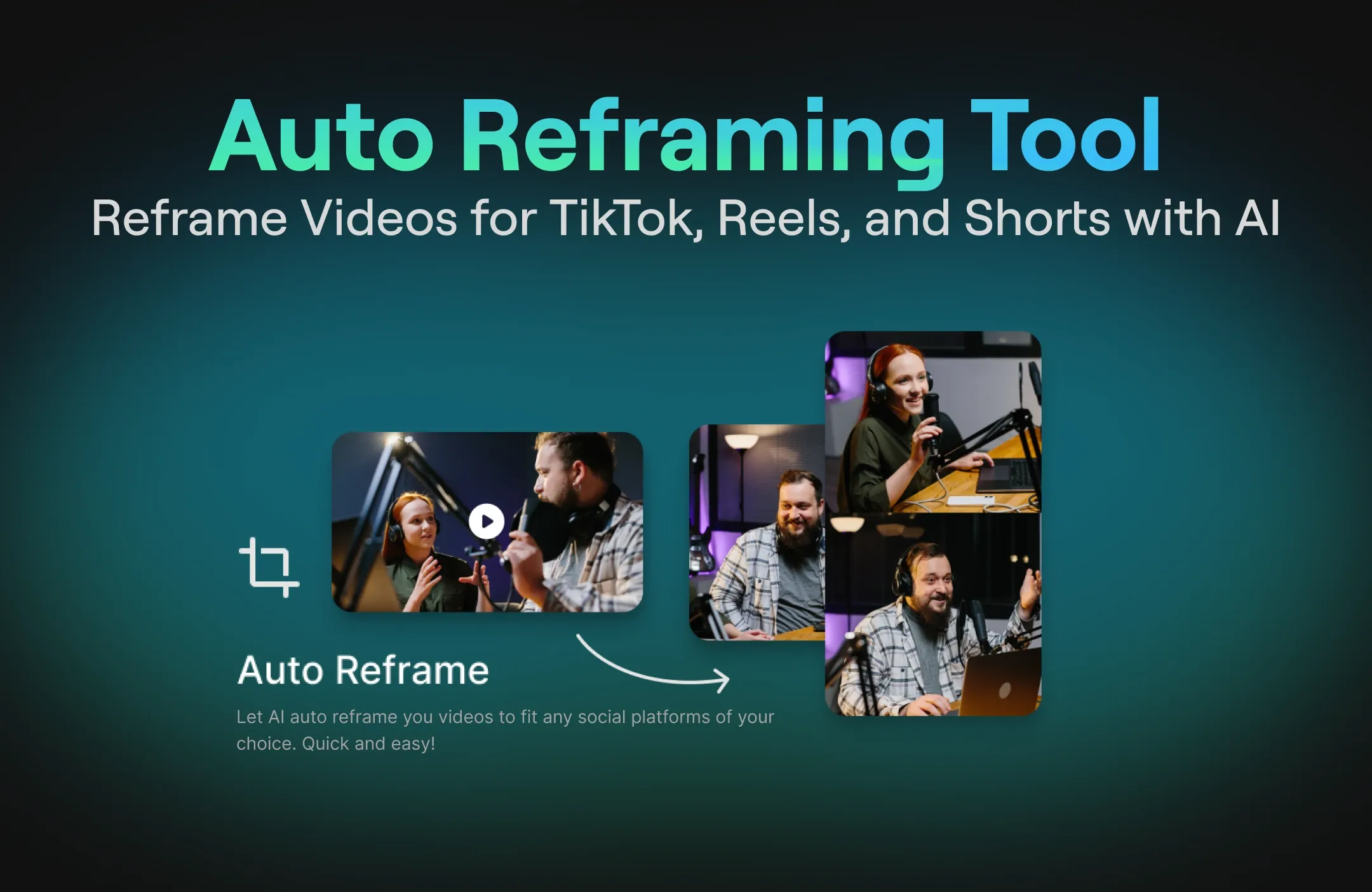
If your TikTok content starts life as something longer, a podcast, webinar, stream, or talking-head video, Reap automates the part that eats your week. Feed it one long video and it finds the strongest moments, cuts them into vertical clips with the speaker tracked in frame, adds animated captions in 100+ languages, can dub into 80 more, and schedules the results straight to TikTok. In an April 2026 benchmark of nine paid AI clipping tools run on the same 90-minute podcast, Reap ranked #1 overall with the fastest time-to-first-clip.
- Best for: podcasters, founders, coaches, and anyone repurposing long-form video into TikToks.
- Why it wins for TikTok: hooks and pacing are chosen for you, captions ship styled and in-safe-zone, there is no watermark on the free tier, and the whole pipeline runs from a browser, API, CLI, or MCP server so it can be automated end to end.
2. CapCut, the all-round default for TikTok
CapCut remains the most complete TikTok-native editor: multi-layer timeline, keyframes, chroma key, auto captions, background removal, and a huge library of templates synced to trending sounds, plus direct TikTok publishing. It earned its place as the default for a reason. Two caveats for 2026: CapCut Pro's price reportedly doubled and some AI features moved behind the paywall, and a 2025 terms-of-service change gave its parent company broad rights over uploaded content, which matters for client and brand work. Our CapCut vs Reap comparison covers the trade-offs in detail.
- Best for: creators who want one app that does trend templates, effects, and manual editing.
- Watch out for: paywalled AI features, content-rights terms, and platform uncertainty in the US.
3. VN Video Editor, best free editing app with no watermark
VN is the answer to "free, powerful, no watermark" on mobile. You get a real multi-track timeline, keyframe animation, and curve-based speed ramping, the tools behind most viral velocity edits, without paying or watermarking. It runs on iOS, Android, and desktop.
- Best for: mobile-first creators who want serious control for free.
- Watch out for: a smaller template and effects library than CapCut.
4. InShot, best for simple, fast social edits
InShot has been a social-editing staple for years because it makes the basics fast: trim, add music, drop in transitions and text, export in 9:16. It is the lowest-friction way to turn raw phone footage into a postable TikTok.
- Best for: quick, on-the-go edits with minimal learning curve.
- Watch out for: the free tier adds a watermark, though it is removable.
5. Splice, best for beat-synced cuts on mobile
Splice focuses on speed: import clips, snap cuts to the beat of a licensed music library, add titles, and export social-ready video in minutes. It feels built for the trend-chasing cadence of TikTok posting.
- Best for: creators who cut to music and post daily.
- Watch out for: it is subscription-based after the free trial.
6. PowerDirector, best free app with a full timeline
PowerDirector packs a genuinely full editing timeline, AI tools, and regular feature updates into a free mobile app, and the free version exports without a watermark. It is the strongest free pick for creators who want desktop-style control on a phone, and it has a Windows version when you need a bigger screen.
- Best for: creators who outgrew simple editors but want to stay free.
- Watch out for: ads and premium effects upsells inside the free app.
7. LumaFusion, best professional editor on iPhone and iPad
LumaFusion is a full multi-track non-linear editor for iOS, iPadOS, and Apple silicon Macs, with granular control over every frame, professional audio tools, and a one-time purchase instead of a subscription. For creators producing cinematic or heavily layered TikToks, it is the mobile ceiling.
- Best for: serious editors who want pro-grade control without a desktop.
- Watch out for: overkill for quick trend posts, and Apple-only.
8. Filmora, best beginner-friendly editor with AI tools
Filmora's mobile and desktop apps hit a friendly middle ground: drag-and-drop editing, beat-sync trimming, auto captions, and a growing set of AI tools, with a gentler learning curve than pro editors. It is an easy recommendation for someone editing their first month of TikToks.
- Best for: beginners who want AI assists without complexity.
- Watch out for: free exports carry a watermark, so budget for the paid tier.
9. Kapwing, best TikTok editor in the browser
Kapwing runs entirely in the browser on any OS, with a proper timeline, auto subtitles, translation, and team collaboration. It is the practical choice when you edit on a work laptop, collaborate with an editor, or refuse to install anything.
- Best for: browser-based editing and small teams.
- Watch out for: the free tier limits exports and watermarks some of them.
10. Canva, best for templates and brand teams
Canva approaches TikTok from the design side: thousands of 9:16 templates, brand kits, scheduled publishing, and dead-simple editing. Marketing teams that value consistency and speed over deep editing control get the most from it.
- Best for: brand and marketing teams producing TikToks at volume.
- Watch out for: watermark-free, higher-quality exports sit on the paid plan.
How to choose the right TikTok editor
Match the tool to your main job:
- You repurpose long videos into TikToks: Reap.
- You want one all-round app with trend templates: CapCut.
- You want free with no watermark: VN or PowerDirector.
- You want the fastest possible edit: InShot or Splice.
- You want professional control on Apple devices: LumaFusion.
- You edit in a browser or with a team: Kapwing.
- You run a brand account from templates: Canva.
For the wider landscape beyond TikTok, see our roundups of the best AI video editing tools in 2026 and the best AI clipping tools for short-form content.
Turn one long video into a week of TikToks with Reap
Most TikTok editing time is not spent polishing a single clip. It is spent doing the same job over and over: scrubbing a long recording for moments, cropping each one to vertical, captioning it, and queuing it for the right posting time. That repetitive middle is exactly what Reap automates.
Give Reap one long video and it will:
- Find the strongest moments and cut them into vertical clips, with the speaker tracked so faces stay centered in 9:16.
- Caption every clip in your style, positioned inside TikTok's safe zones, with support for up to 100 languages. See our guide to the best caption apps for how caption quality compares across tools.
- Dub clips into 80 languages so one recording can feed TikTok audiences in multiple markets.
- Schedule and publish to TikTok, Reels, Shorts, and LinkedIn from one place.
- Run from an API, CLI, or MCP server, so an agency or an AI agent can drive the whole pipeline hands-free.
There is no watermark, no third-party rights over your footage, and nothing to install. Start free at app.reap.video, or see Reap pricing for higher volumes.
Bottom line
There is no single best TikTok video editor, but there is a best one for your workflow. CapCut is still the strongest all-rounder if its pricing and terms do not bother you. VN and PowerDirector are the free, no-watermark picks. LumaFusion is the pro option, and Kapwing and Canva cover browsers and brand teams. And if your TikToks start as long videos, skip the manual timeline entirely: Reap finds the clips, captions them, and posts them, turning one recording into a week of content.