
Video creators today publish content for audiences across many countries and languages. However, many languages are written in scripts that are not based on the Latin alphabet, such as Arabic, Devanagari, Cyrillic, Hebrew, or Chinese characters.
While native scripts work well for local audiences, many viewers prefer reading captions written using the Latin alphabet. This format is known as Romanization.
For example, instead of showing captions in the original script, the spoken language can be written using Latin characters so that more viewers can read it easily.
To make this easier for creators, Reap now supports Romanized captions for dozens of languages, allowing videos to display captions in Latin characters even when the original language uses a different writing system.
What Are Romanized Captions?
Romanized captions refer to writing a language using the Latin alphabet instead of its original script.
This process is called romanization or transliteration, where words are represented using Latin characters while keeping their pronunciation.
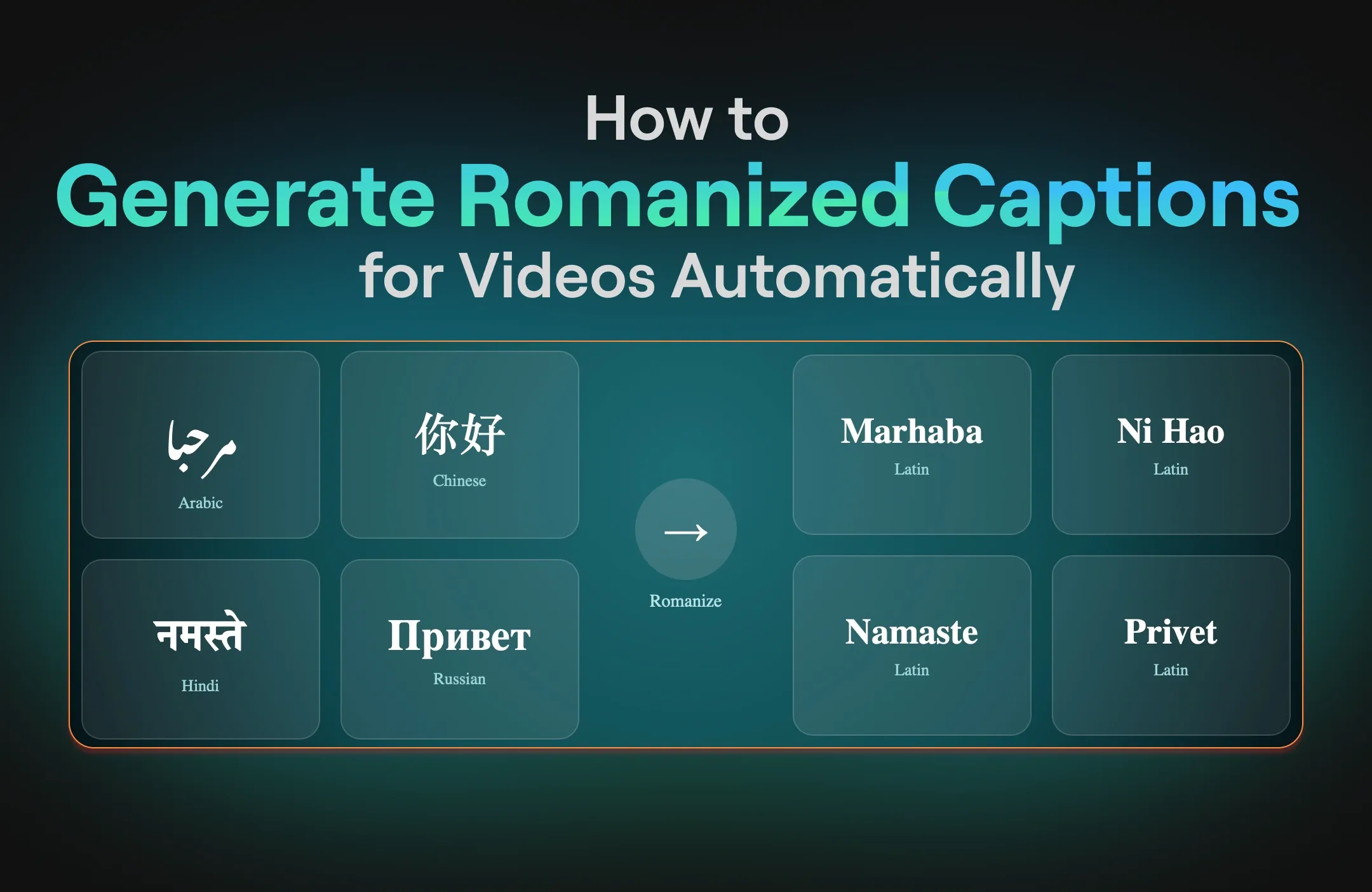
For example:
| Original Script | Romanized Caption |
|---|---|
| नमस्ते | Namaste |
| مرحبا | Marhaba |
| Привет | Privet |
| 你好 | Ni Hao |
Romanized captions are widely used across social media because they make languages easier to read for global audiences.
Why Romanized Captions Are Useful for Video Content
Many viewers watch videos on mobile devices or across international platforms. In these cases, Romanized captions make content more accessible.
Benefits include:
- easier reading for global audiences
- improved accessibility across regions
- easier typing and editing for creators
- better compatibility with social media platforms
Romanized captions are especially helpful when content is consumed by multilingual audiences or viewers who understand the language but prefer reading it using Latin characters.
Romanized Languages Supported by Reap
Reap now supports Romanized captions for 40+ languages that use non-Latin scripts.
These include languages written in:
- Arabic script
- Devanagari script
- Cyrillic script
- Hebrew script
- Greek script
- Chinese characters
- Japanese scripts
- Korean Hangul
- and many others
Some examples include:
| Language | Romanization System |
|---|---|
| Arabic | ALA-LC / Chat Arabic |
| Hindi | IAST / Hunterian |
| Russian | BGN/PCGN / ISO 9 |
| Chinese | Pinyin |
| Japanese | Hepburn Romaji |
| Korean | Revised Romanization |
| Greek | ELOT 743 |
| Hebrew | ISO 259 |
| Persian | Fingilish |
This means creators can generate captions using Latin characters while preserving the pronunciation of the original language.
How to Generate Romanized Captions With Reap
Creating Romanized captions in Reap follows the same simple workflow used for standard captions.
Upload Your Video
Upload your video file or paste a video link from YouTube or other sources. Reap analyzes the speech and generates captions automatically.
Select a Script Option
Choose Romanized output for supported languages to convert captions into Latin characters while preserving pronunciation.
Customize Caption Style
Apply caption styles optimized for TikTok, Instagram Reels, and YouTube Shorts to improve readability and engagement.
Export the Video
Export your video once generated with Romanized captions already embedded so it can be published immediately across multiple platforms.
Why This Feature Is Valuable for Creators
Supporting Romanized captions opens new opportunities for creators targeting international audiences.
With Romanization support, creators can:
- reach viewers across multiple regions
- create captions that match online communication styles
- improve accessibility for multilingual audiences
- publish videos faster without manual transliteration
Instead of manually converting captions into Latin characters, Reap automates the process and ensures consistent formatting.
As video platforms become more global, creators increasingly need caption formats that work across languages and scripts. Romanized captions make it easier for audiences to read and understand content even when they are not familiar with the original writing system.
With support for Romanized captions across dozens of languages, Reap helps creators produce videos that are more accessible, more engaging, and easier to distribute across global platforms.
Try Reap and generate Romanized captions for your videos.